
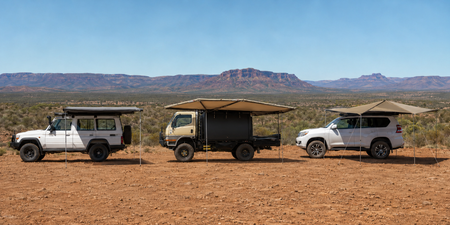
Which 4WD Awning Is Right for Your Setup?
Posted by Rugged Dave on 27th Feb 2025
Let's get it right.
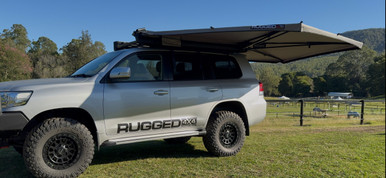
A good awning should suit the way you travel, the space around your vehicle and the equipment already fitted to your roof or canopy. The biggest option isn't automatically the best one — a compact square awning can make more sense for quick roadside stops, while a wraparound design may suit a camp built around the side and rear of the vehicle.
This guide compares square, 180°, 230° and 270° awnings, plus caravan and camper options, and walks through the checks worth making before you buy.
Compare awning types Shop all 4WD awningsStart With the Footprint
Square, 180°, 230° or 270°?
The degree number describes the general span of the awning around the vehicle. Treat the styles below as a starting point, then check the individual listing for the exact configuration.
Square / pull-out
Extends from one side of the vehicle for a simple, defined shelter area — a solid fit for short stops, cooking or a compact camp footprint.
Shop square awnings180°
A broader arc than a straight pull-out. Check where it begins and ends when deployed — the label alone won't confirm your tailgate or roof accessories stay clear.
Shop 180° awnings230°
Sits between the compact 180° format and the wider wraparound coverage of many 270° designs. Exact coverage varies by model.
Shop 230° awnings270°
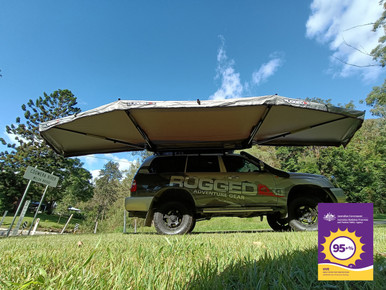
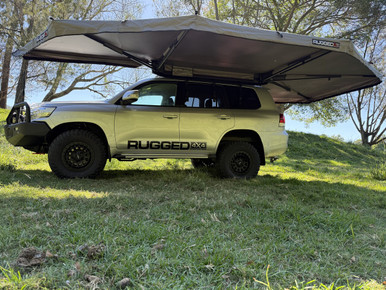
Wraps around a substantial part of the vehicle for a connected side-and-rear area. Confirm packed size, weight, opening direction and bracket needs for the exact model.
Shop 270° awnings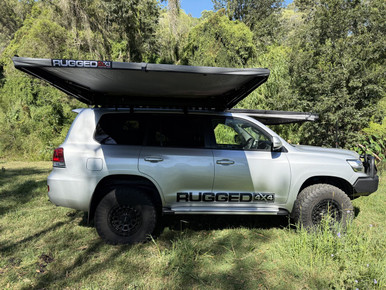
| Awning style | May suit | Think about before buying |
|---|---|---|
| Square / pull-out | Quick stops, compact camps, direct side shelter | Deployed depth, packed length, wall options, door clearance |
| 180° | Broader coverage without a full wraparound footprint | Opening direction, rear access, exact coverage shape |
| 230° | A middle ground between 180° and 270° layouts | Vehicle clearance, campsite footprint, compatible accessories |
| 270° | Larger camps using both side and rear vehicle areas | Packed size, listed weight, rack capacity, deployment space |
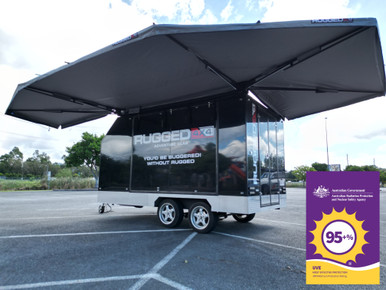
| Caravan / camper | Awnings mounted to a caravan, camper or fixed platform | Mounting surface, vehicle-specific hardware, clearances, accessory fit |
This comparison describes general formats only. Always check the individual product dimensions, specifications and mounting instructions before you buy.
Make the Footprint Work for You
Choose around your camp routine
The right question isn't just “which awning gives me the most coverage?” — it's “where do I actually spend time around the vehicle?”
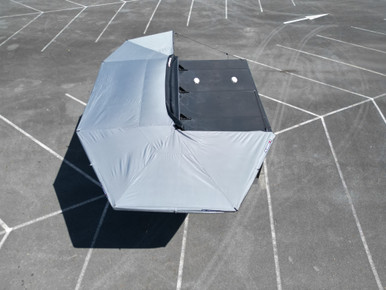
Brief stops mainly need a sheltered spot for lunch or a chair — a square awning can do that without adding to your campsite footprint. If your fridge or drawers are accessed from the rear, look at awnings that extend toward that working area and check the deployed frame won't foul the tailgate, canopy doors or roof-mounted gear. For longer stays, a broader 180°, 230° or 270° layout can connect the vehicle, table and cooking area — if your campsite space and vehicle configuration support it.
- Mainly need direct shade beside the vehicle? Start with square awnings.
- Want broader coverage in a contained footprint? Compare 180° and 230°.
- Camp organised around the side and rear? Compare 270° and check rear-door clearance.
- Fitting a caravan or camper, not a roof rack or canopy? Start with the dedicated range.
- Want to add walls later? Confirm a wall kit is listed for your exact model first.
Mounting & Packed Size
Make sure the setup works before you order
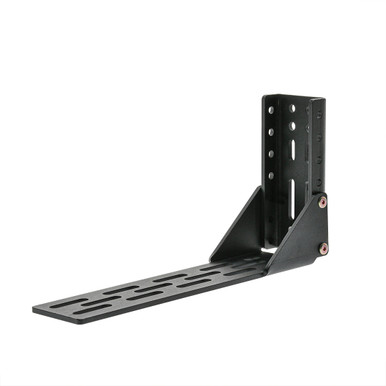
An awning becomes part of your roof or canopy setup, so its packed dimensions and listed weight matter as much as the area it covers when open. Start by checking the usable length along your rack or canopy, the position of existing accessories, and the clearance needed for doors, windows, aerials or rooftop tents.
The awning, brackets and hardware all add to the load carried by the rack or mounting structure — confirm the applicable limits with the rack, vehicle, canopy and awning manufacturers, and use a qualified installer if the fitment is unclear. Passenger-side mounting is common for roadside shelter in Australia, but it isn't a universal rule — your preferred camp layout and the awning's design may point the other way.
Plan the Complete Shelter
Think beyond the awning roof
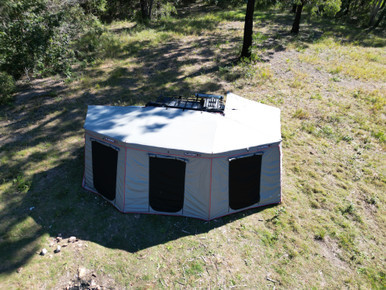
An awning roof provides overhead shelter; optional walls change how the space functions — adding privacy, reducing exposure from one direction, or enclosing the camp area. Don't assume a wall kit fits another awning just because the degree rating looks similar — confirm it's listed for the exact model and orientation.
Follow the manufacturer's setup, anchoring and pack-away instructions every time. Conditions can change quickly — no awning should be treated as a permanent storm shelter. Don't leave it deployed unattended, and pack it away if conditions exceed the product guidance or you're unsure it can be used safely.
Compare awning wall kits Browse parts & accessoriesA Different Mounting Environment
Choosing an awning for a caravan or camper
A caravan or camper awning should be assessed against the mounting surface and layout of that platform, not treated as a standard 4WD awning purchase. Consider where doors, windows, storage hatches and exterior fittings sit when the awning is both packed and deployed — it shouldn't obstruct normal access or interfere with gear already mounted to the side or roof.
The same pre-purchase checks still apply — dimensions, listed weight, opening direction, hardware, load limits and wall-kit compatibility — but the suitable brackets or legs may differ from a roof-rack install. Confirm fitment against your exact caravan or camper and awning combination, and seek advice if the listing doesn't answer that clearly.
Shop caravan and camper awnings View brackets & legs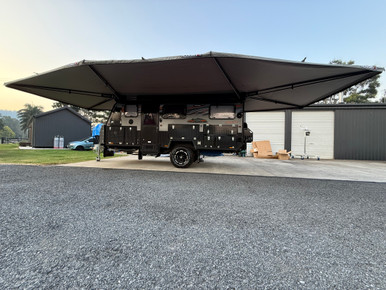
Final Check
Seven things to confirm before choosing
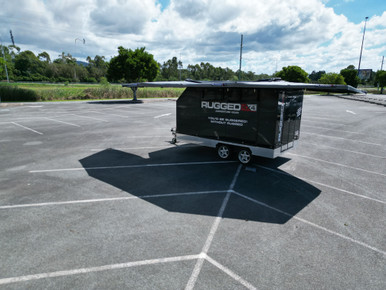
There's no single “best” awning — only the right one for your setup
Start with the style, then compare the individual product's dimensions, orientation, listed weight, included hardware and compatible accessories. Taking those extra checks before ordering helps you build a cleaner, more practical touring setup.
Find the right awning Need help? Contact Rugged 4x4