
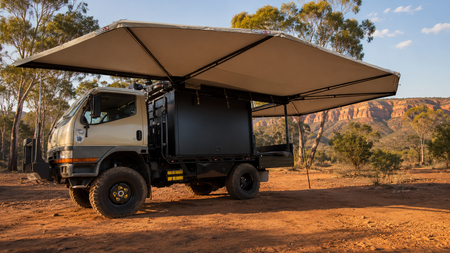
10 Benefits of a 4WD Awning for Touring & Camping
Posted by Rugged Dave on 11th Aug 2026
A 4WD awning is one of the most useful additions you can make to a touring or camping setup. Mounted to a suitable roof rack or platform, it creates shade and shelter beside your vehicle without using valuable storage space inside the cabin.
Whether you are stopping for lunch, setting up a camp kitchen or settling in for a few days, the right awning can make life outdoors more comfortable and organised. This guide explains the main 4WD awning benefits, common uses and the features to consider before choosing one for your vehicle.
A well-matched 4WD awning provides fast shade, useful weather protection and a more functional campsite. The best option depends on your vehicle, roof-rack capacity, preferred coverage and how you travel.
10 Practical Benefits of a 4WD Awning
Fast Shade from the Australian Sun
One of the clearest benefits of a 4WD awning is convenient shade. Instead of looking for a suitable tree or carrying a separate shelter, you can create a covered area directly beside your vehicle. It is useful at campsites, beaches, sporting events and roadside stops where natural shade may be limited.
Shelter from Light Rain and Changeable Weather
A properly set-up awning can give you a dry place to prepare food, organise equipment or wait out a passing shower. Fabric tension and water runoff are important, and walls can improve protection on compatible models. Always follow the product instructions and pack the awning away when conditions exceed its intended use.
More Usable Living Space at Camp
An awning extends your campsite beyond the vehicle. The covered area can become a place for chairs, a table, food preparation or simply relaxing out of the sun. Larger wrap-around awnings can help create separate activity zones beside and behind the vehicle.
Faster Roadside and Lunch Stops
Because the awning remains mounted to your vehicle, there is less loose equipment to unload. A quick-deploy or semi-automatic model can be especially useful for touring, when you may stop several times during the day and do not want to build a complete shelter at every break.
A Practical Outdoor Kitchen and Dining Area
Positioned beside drawers, a fridge or a rear kitchen, an awning can create a convenient food-preparation area. It helps protect cooks, tables and supplies from direct sun and light rain. Cooking equipment should always be used with suitable clearance and ventilation, well away from awning fabric and other combustible materials.
Better Protection for Camping Gear
Chairs, tables, recovery equipment and other frequently used items can be kept under cover instead of being exposed to direct sun or passing showers. This makes it easier to organise your campsite and helps prevent wet or dusty equipment from being returned to the vehicle unnecessarily.
Added Privacy with Compatible Walls
Model-specific wall kits can turn part of the covered area into a more private and protected space. Depending on the awning and wall configuration, this may be useful for changing, relaxing, sheltering children or creating a windbreak. Check that every wall kit matches the exact awning model, size and opening orientation.
Flexible Coverage for Different Trips
Awnings are available in compact side-opening designs and larger wrap-around configurations. That makes it possible to select coverage that suits solo touring, family camping, trade work, beach days or longer base-camp stays rather than relying on a one-size-fits-all shelter.
Less Equipment Inside the Vehicle
A vehicle-mounted awning travels outside the cabin in its protective cover. Although its weight still counts towards the roof-rack and vehicle limits, it does not occupy the storage area used for food, clothing, tools and other touring equipment.
A Shelter That Is Ready When You Need It
Once correctly mounted, an awning remains part of your touring setup. There is no separate shelter bag to find at the bottom of the vehicle, which can make spontaneous stops easier. Regular checks of the brackets, fasteners and protective cover will help keep it ready for the next trip.
Common Uses for a Vehicle Awning
The same awning can serve different purposes throughout a trip. Common uses include:
- Creating shade for roadside breaks and picnic stops
- Covering a camp kitchen, fridge or food-preparation area
- Providing a dining and relaxation space beside the vehicle
- Sheltering tools and equipment during minor repairs
- Creating added privacy with compatible wall panels
- Providing a covered base for events, work sites and family activities
Which 4WD Awning Type Suits You?
Awning names generally describe the arc or style of coverage, but the actual sheltered area varies by model and vehicle. Compare the dimensions, weight and specifications of the individual product before buying.
| Awning type | Typical coverage | Often suits | Consider |
|---|---|---|---|
| 180° awning | Broad coverage along one side of the vehicle | Tourers wanting a simple dining or rest area | Vehicle length, mounting side and required projection |
| 230° awning | Extended coverage around the side and part of the rear | Campers wanting more shelter without a full 270° footprint | Rear-door access and opening orientation |
| 270° awning | Wrap-around coverage along the side and rear | Families, groups and established camp kitchens | Awning weight, rack capacity and available campsite space |
| Square awning | Direct rectangular coverage from one side | Quick stops and compact, straightforward setups | Projection, support requirements and wind exposure |
Freestanding and Semi-Automatic Awnings
“Freestanding” and “semi-automatic” describe setup features rather than the coverage angle. A freestanding frame is designed to remain open without permanent vertical legs in suitable conditions, while a semi-automatic mechanism assists deployment. The exact process and support requirements vary, so always follow the instructions supplied with the model.
How to Choose the Right 4WD Awning
Check Vehicle and Roof-Rack Compatibility
Confirm that the vehicle, rack or platform and mounting points can support the awning. Include the awning, brackets and every other roof-mounted item when checking dynamic and static load limits. If you are unsure, speak with the vehicle, rack or awning manufacturer before installation.
Choose the Coverage You Will Actually Use
A compact awning may be enough for solo trips and lunch stops, while a larger family or established kitchen can benefit from wrap-around coverage. Measure where chairs, tables and doors will sit instead of choosing by degree or overall size alone.
Select the Correct Opening Side
Driver-side and passenger-side versions are not interchangeable on every model. Consider your doors, rear access, kitchen position, common campsite layout and whether the awning needs to wrap around the back of the vehicle.
Look Beyond the Fabric
Fabric quality matters, but so do the arms, hinges, brackets, fasteners, protective cover and availability of replacement parts. Check the product's stated UV and water-performance information rather than assuming every awning offers the same protection.
Plan for Walls and Accessories
If you want additional privacy or weather protection, confirm that a compatible wall kit is available before buying. Also check the required awning mounting brackets, support legs, guy ropes and replacement components.
Using a 4WD Awning Safely
Before every trip, inspect the brackets, fasteners, arms, hinges, fabric and protective cover. Recheck mounting hardware after installation and after travelling on corrugated roads. Keep flames, hot appliances and exhaust gases safely away from the awning and walls.
How to Clean and Maintain Your Awning
Remove loose dirt after each trip and use the cleaning method recommended for your specific awning. Avoid harsh products unless the manufacturer approves them. After wet, coastal or dusty travel, inspect the fabric, frame, brackets and fasteners for damage or contamination.
Always allow the fabric to dry completely before long-term storage. Packing an awning while damp can encourage mould, odour and material deterioration. Replace damaged parts before the next trip and use model-specific awning parts and accessories where required.
Is a 4WD Awning Worth It?
For travellers who regularly stop, cook or relax beside their vehicle, an awning can earn its place quickly. It creates useful shelter without taking up interior storage and can make both short breaks and longer camps more comfortable. The value comes from choosing a model that suits your rack capacity, preferred coverage and real travel habits rather than simply buying the largest option.
Find the Right Awning for Your Setup
Compare coverage styles, opening systems and vehicle-mounting options across the Rugged 4x4 range.
Shop 4WD awnings View mounting brackets4WD Awning FAQs
What is a 4WD awning?
A 4WD awning is a vehicle-mounted shelter that opens from a roof rack, platform or suitable mounting system. It creates shade and weather protection beside or around the vehicle, depending on the awning's design.
What are the main benefits of a 4WD awning?
The main benefits are fast shade, shelter from light rain, extra outdoor living space and a convenient covered area for cooking, dining, relaxing or organising equipment.
What size 4WD awning do I need?
Choose a size that suits your vehicle length, roof-rack capacity, available mounting space and intended use. Measure the vehicle and planned campsite layout, then confirm the awning's packed dimensions, weight and open footprint.
What is the difference between a 180° and 270° awning?
A 180° awning generally covers one side of a vehicle, while a 270° awning wraps around the side and rear for a larger sheltered area. Exact coverage and dimensions vary between models.
Can I use a 4WD awning in the rain?
A suitable awning can provide shelter from rain when it is correctly tensioned and set up for water runoff. Follow the product instructions, do not allow water to pool on the fabric and pack the awning away in severe weather.
Can a freestanding awning be used in windy conditions?
Freestanding does not mean windproof. Use legs, guy ropes and pegs whenever the manufacturer or conditions require them, and close the awning if wind becomes strong, gusty or unpredictable.
Will a 4WD awning fit any vehicle?
No. Compatibility depends on the vehicle, roof rack or platform, mounting points, load limits, awning weight and opening orientation. Confirm every requirement before installation.
Should I choose a driver-side or passenger-side awning?
Choose the opening side that works with your vehicle doors, rear access, kitchen position and usual campsite layout. Wrap-around awnings are often sold in dedicated orientations, so check carefully before ordering.
How long does a 4WD awning take to set up?
Setup time depends on the design, size, weather and support requirements. Quick-deploy and semi-automatic models are designed to reduce setup effort, but legs, guy ropes, walls and pegs will add time when required.
How should I clean and store a 4WD awning?
Remove loose dirt, follow the manufacturer's cleaning instructions and let the fabric dry completely before long-term storage. Regularly inspect the cover, fabric, frame, brackets and fasteners for damage.